-
tel:
+86 13852552505 -
email:
summer@cishine.com

Building a smart transportation system to avoid information silos
Building a smart transportation system to avoid information silos
May 09, 2019
The construction of smart cities is based on breaking through urban development bottlenecks and promoting harmonious urban development, covering various aspects of urban life and involving various systems of urban operation management such as transportation, security, tourism, and education. When the goals of smart cities are decomposed and implemented, they are realized as larger subfields such as smart transportation, smart tourism, smart healthcare, and smart education.
Urban development starts with transportation, as transportation is the lifeline of urban economic development. Smart transportation is an important component of smart city construction. Smart transportation can alleviate traffic congestion, improve urban traffic conditions, maximize urban transportation efficiency, establish a new generation of comprehensive transportation operation coordination system that coordinates people, vehicles, roads, and the environment, and enhance the overall operational efficiency of urban transportation systems. It plays a very important role in the wave of smart city construction.
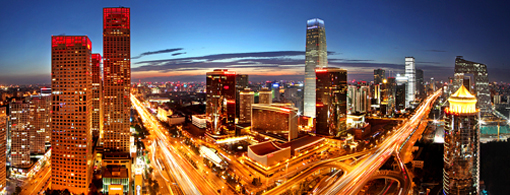
With the rapid improvement of urban economic level in our country, the construction of transportation infrastructure is accelerating, and the demand for urban transportation is increasing significantly. The contradiction between transportation supply and demand is becoming more prominent, and issues such as traffic congestion, pollution, frequent accidents, and parking difficulties have become bottlenecks restricting the social and economic development of cities, and have become the focus of attention for transportation management departments and the key focus of smart transportation construction.
Currently, smart transportation applications mainly include:
1.Construction of high-definition video surveillance systems
Improvement of systems such as checkpoints, electronic police, traffic guidance, signal control, traffic information analysis, traffic event detection, and mobile policing to assist traffic management personnel in traffic command and dispatch, curb traffic violations, and maintain traffic order; and to assist public security personnel in security control and criminal investigation.
2.Construction of traffic “flow, situation analysis, and guidance” systems
Construction of road traffic flow and traffic situation analysis systems, and traffic guidance release systems. By analyzing real-time traffic congestion and releasing real-time road conditions, drivers can choose travel routes reasonably, reduce local congestion, and be guided to detour.
3.Construction of GPS monitoring system
Realize comprehensive information management of passenger and dangerous vehicles, including file management, positioning monitoring, and real-time dispatch, to effectively curb issues such as vehicle speeding, deviation from routes, and slow emergency response. This enhances dynamic management of vehicle information, improves monitoring and emergency command and dispatch capabilities, and provides a guarantee for safe driving and scientific management of vehicles.
4.Construction of public bus supervision system
Effectively address security monitoring inside buses, surveillance of fare evasion by passengers and embezzlement of fare by staff. It helps identify accident liability after accidents such as vehicle scraping or collisions during operation, eliminating the outdated situation of buses being “invisible and inaudible”.
5.Construction of urban parking guidance management system
Orderly managing roadside and non-roadside parking resources through intelligent and network technologies to improve the convenience of driver use, standardize the charging process, and simplify the work of toll collectors. By providing real-time information on parking lot locations, available spaces, and guiding routes through roadside parking guidance screens or mobile apps, drivers can save time searching for parking spots, reduce emissions, congestion, noise pollution caused by vehicle movement, and make parking no longer difficult.
6.Construction of vehicle networking system
Internet companies are active in the field of autonomous driving, leveraging their technology, data accumulation, capital advantages, and mature internet thinking to continuously introduce vehicle networking products and solutions, seizing the market and playing an important role in the development of smart transportation industry.
Difficulties and bottlenecks in the application of smart transportation in smart city construction:
(1)Lack of top-level design for smart transportation
Currently, smart transportation in Chinese cities generally lacks top-level design and urgently needs to establish a comprehensive framework system for smart transportation. Based on scientific methodologies, strategic planning and overall design of smart transportation are needed from the perspective of urban transportation as a whole, guiding the design, construction, and operation management of city smart transportation systems from top to bottom and from near to far.
(2)Low degree of information sharing among departments
There are many transportation-related departments and subordinate units, with information systems developed by different software companies at different times, running independently without interconnection, resulting in information silos. This leads to fragmented distribution of traffic data, low information utilization rate, poor integration, and lack of effective information communication and sharing among departments.
(3)Difficulty in fully utilizing massive traffic data
Due to the independence of various departmental information systems, different data standards and formats, it is difficult to share and utilize massive data existing in various business systems. This limits the perception and collection of traffic information, reduces the potential value of data, and fails to fully exploit its value. In functions such as traffic monitoring, travel services, traffic command, and emergency response, it is unable to fully utilize the intelligent decision support role of pre-prediction, mid-management, and post-evaluation.
In addition to doing well in their own industry, smart transportation needs to extend horizontally and serve other industries in smart cities such as smart healthcare, smart security, smart environmental protection, etc., to avoid information silos or duplicate construction. Smart transportation serving smart healthcare, for example, when a traffic accident occurs in a certain place and requires medical personnel for rescue, where to dispatch ambulances and which route is the most smooth, the transportation department needs to cooperate to provide the best solution. When planning road networks, the transportation department should also design and layout emergency lanes. Smart weather service serving smart transportation, where smart transportation obtains weather information and provides reasonable travel route planning for the public, releases traffic guidance information through guidance screens, such as warning slogans and simple graphics for strong winds, dense fog, etc., allowing drivers to understand road conditions in advance, avoid traffic jams, and reduce traffic accidents.
Contact US
Product Information
Quantity
Unit
Piece
Support order samples, customization, wholesale direct, and complete payment. If the product you look for does not have corresponding customized content, pls fill out the form below to contact us, and we will reply ASAP.