-
tel:
+86 13852552505 -
email:
summer@cishine.com

Introduction to Traffic Guidance Screens
Introduction to Traffic Guidance Screens
May 09, 2019
The traffic guidance screen is made of LED illuminated secondary tubes and serves as a display screen for traffic guidance. It is typically used on highways. The traffic guidance screen consists of the screen body, drive system, control system, communication equipment, power system, framework, enclosure, etc. It includes graphical guidance signs, which are composed of a combination of regular road signs and variable message signs, creating a versatile information display screen.
The traffic guidance screen presents the overall route outline of the road to drivers in a graphical manner, serving as directional signs. In the static graphical section, LED variable light strips are embedded to indicate the real-time traffic conditions such as smooth (green), congested (red), or crowded (orange) by emitting different colored lights. This allows drivers to judge and choose the appropriate route for travel, thereby serving the purpose of traffic guidance.
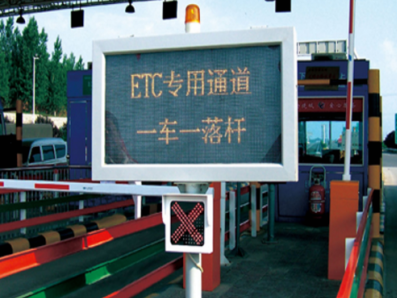
The traffic guidance screen has significant advantages such as displaying intuitive and vivid images, providing a large amount of information, relatively short recognition time, and guiding unfamiliar drivers on the road. It is suitable for densely populated urban road networks and main highway corridors.
The scope of application for traffic guidance screens includes information display and advertising at exhibition centers, sports venues, airports, ports, stations, streets, highways, etc. They come in various specifications based on pixel size, such as P10mm, P12mm, P14mm, P16mm, P20mm, etc. The display types include outdoor single-color, outdoor dual-color (red and green), and outdoor full color displays.
Contact US
Product Information
Quantity
Unit
Piece
Support order samples, customization, wholesale direct, and complete payment. If the product you look for does not have corresponding customized content, pls fill out the form below to contact us, and we will reply ASAP.